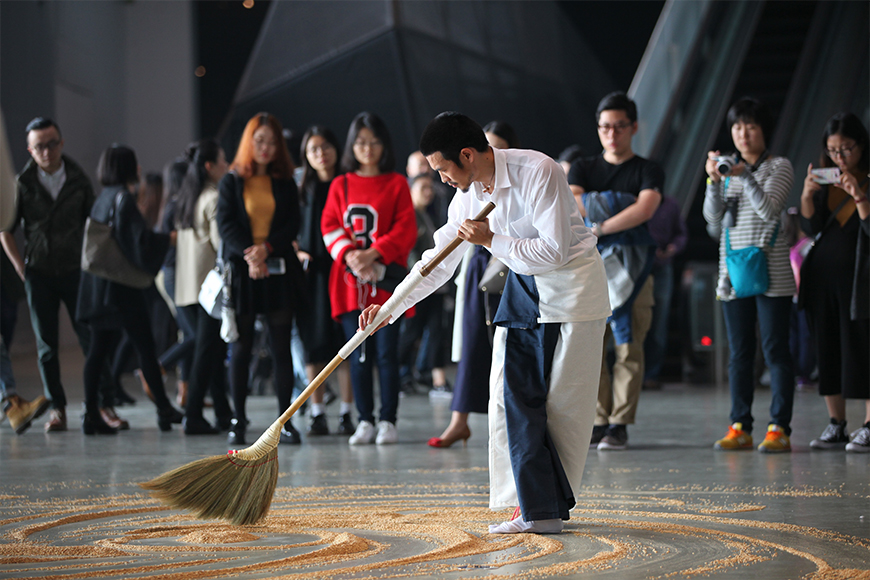
The preservation of choreographic work lays challenge to the core principles of the traditional museum model—perpetuity and permanence. What processes might better serve the preservation of choreographic works? And how might knowledge transmission occur within and without the institution? The speakers in this session discuss case studies and experiences of archiving and conserving works that engage with body, memory and social networks. Louise Lawson discusses the conservation practice and processes that are being developed at Tate to preserve performance art. Robert Lazarus will reflect on the importance of stretching our understanding of conservation practices through the nature of the artworks themselves, and how this responsive approach can shape the teaching and learning of new generations of conservators.
Date:
Tuesday 3 November, 8pm
Panel:
Louise Lawson (Conservation Manager, Tate) and Robert Lazarus (Lecturer, Grimwade Centre for Cultural Materials Conservation, University of Melbourne)
Moderator:
Stephen Gilchrist (Lecturer, University of Sydney)
Precarious Movements: Conversations is a three-part program of live talks with artists, curators and conservators that reflects on what happens when works of a choreographic nature enter into the museum. Each session focuses on a particular phase of a work’s museum life cycle: how its presentation challenges existing display systems and program infrastructure; how its ephemerality and mutability confront current collection and acquisition frameworks; and how a choreographic work’s particular relationship to body, memory and social networks might shift institutional practices of archiving and preservation.
Co-presented by MUMA and the Precarious Movements: Choreography and the Museum research group, this program reflects on the various types of knowledge transmission that occur at each stage of interaction between artist and museum, and how choreographic practices themselves might change the structural and material form of the museum. It advocates for the centrality of the artist’s voice and the capability of the museum to listen.

 Robert Lazarus